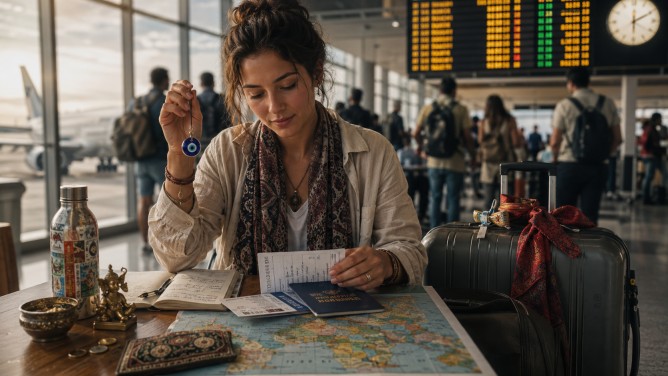
Embarking on a journey often comes with its own blend of excitement and anxiety, and throughout history, people across the globe have developed unique superstitions to ensure a safe and fortunate trip. These customs, woven into the fabric of diverse cultures, continue to be observed by many travelers today. From the use of everyday items to specific actions taken before and during travel, these superstitions highlight the universal human desire for protection and good fortune while on the move.
One such practice involves carrying a clove of garlic, a tradition rooted in the Balkans. Garlic is believed to ward off negative energy and the evil eye, providing a shield against misfortune. Travelers in this region often tuck a clove into their luggage before departure, hoping it will safeguard them throughout their journey. Similarly, the act of touching or tapping the exterior of an aircraft prior to boarding is a common ritual among some travelers. This simple gesture is thought to bring good luck and offers a sense of comfort to those who may feel uneasy about flying.
The notion of starting a trip “on the right foot” takes on a literal meaning for some, as stepping onto a plane with the right foot first is viewed as a harbinger of good fortune. In the Middle East and the Balkans, another cherished custom involves sprinkling or pouring water behind a departing traveler. The flowing water is symbolic of a smooth and safe journey, and it carries the hope of a safe return for the traveler. Numbers also play a significant role in travel superstitions, with certain figures being avoided due to their perceived negative connotations. The number 13 is considered unlucky in many Western cultures, while in China, the number 4 is often shunned because it sounds similar to the word for death. Italy, on the other hand, regards 17 as an unlucky number, influencing choices in hotel room numbers and building floors.
In Slavic tradition, sitting on one’s packed luggage for a brief period before setting off is believed to offer a moment of reflection and mental preparation. This pause serves as a grounding ritual, allowing travelers to collect their thoughts before embarking on their journey. Additionally, in various cultures, it is thought that sweeping the floor immediately after someone leaves is unlucky. The act of sweeping is believed to metaphorically sweep away the person’s good fortune or hinder their safe return. Despite the lack of scientific evidence supporting these beliefs, they remain an integral part of travel culture. For many, these rituals are less about proving effectiveness and more about preserving cultural identity, family traditions, and the thrill of beginning a new adventure.