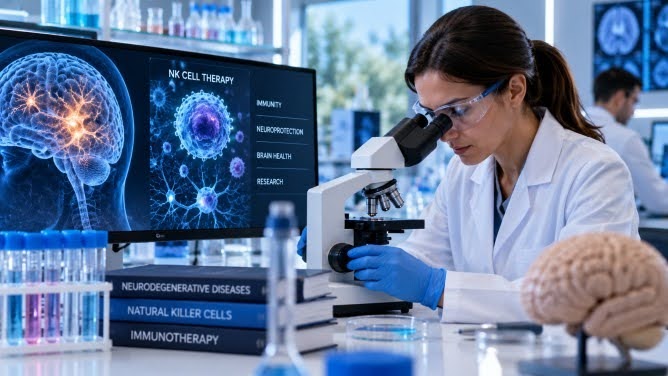
Research into neurodegenerative diseases such as Alzheimer’s, Parkinson’s, amyotrophic lateral sclerosis (ALS), and multiple sclerosis is increasingly focusing on Natural Killer (NK) cells. As part of the innate immune system, NK cells are involved in identifying and responding to infected or abnormal cells and can also modulate inflammatory responses. Scientists are intrigued by the potential relationship between immune activity and neurodegeneration, particularly given the role of chronic inflammation and abnormal protein accumulation in these conditions. Despite these promising avenues, the development of NK cell therapies remains in its infancy, with no solid clinical evidence yet supporting their use as a treatment for these diseases.
A Phase I clinical trial conducted in 2025 explored the use of expanded NK cells in patients with Alzheimer’s disease. The study included 11 participants, 10 of whom were analyzed after receiving intravenous infusions of an autologous, non-genetically modified expanded NK cell product every three weeks. The trial primarily focused on assessing the safety of the treatment, while also monitoring cognitive function and biomarkers in cerebrospinal fluid related to neuroinflammation and degeneration. Preliminary results indicated some changes in cognitive measures and biomarkers like pTau181 and GFAP, without any adverse events directly linked to the NK cell product. However, the small scale of this trial means larger studies are needed to evaluate the potential of NK cell therapy in altering the course of Alzheimer’s disease.
The potential role of NK cells in Parkinson’s disease is also being studied. A 2020 preclinical study published in the Proceedings of the National Academy of Sciences revealed that NK cells might interact with and degrade alpha-synuclein aggregates, a hallmark of Parkinson’s, in both laboratory and animal models. The study also noted an increase in alpha-synuclein pathology and neuroinflammation when NK cells were depleted in a mouse model, suggesting these cells could regulate immune activity in Parkinson’s. Nonetheless, these findings are primarily preclinical, and further research is necessary to determine their relevance to human treatments.
Understanding the role of NK cells in neurological diseases is complex. Different populations of NK cells can have varied functions, with their effects heavily dependent on the disease type, stage, and tissue environment. Consequently, merely increasing NK cell numbers may not yield beneficial outcomes. Researchers are actively investigating which NK cell subsets, activation states, and treatment protocols might offer therapeutic advantages. Key questions remain about the efficacy of infused NK cells in the central nervous system and their potential to alter long-term disease progression.
Current evidence underscores NK cells as active regulators within the immune system, with emerging studies highlighting their potential interactions with neuroinflammation and protein aggregates. However, the ability of NK cell therapy to prevent, slow, or reverse neurodegenerative diseases in humans is not yet established. As such, NK cell therapy remains a promising yet investigational area of cellular medicine. Individuals considering such treatments should consult healthcare professionals and thoroughly evaluate scientific evidence and safety data. This article serves an educational purpose and is not intended as medical advice.
Legal Disclaimer: The information contained in this article has been provided by independent third-party contributors, clients, or content partners. We do not independently verify the accuracy, completeness, legality, ownership, licensing, or reliability of submitted content, including text, images, videos, trademarks, or other media materials. The submitting party is solely responsible for ensuring that all content, including images and media assets, complies with applicable copyright, trademark, licensing, and intellectual property laws. We disclaim liability for any unauthorized use of copyrighted or proprietary materials by third parties. If you believe that any content published on this platform infringes your intellectual property rights, kindly contact the author above for prompt review and resolution.