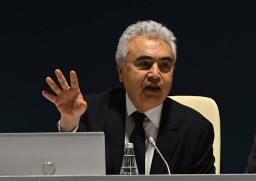
The International Energy Agency is prepared to convene an emergency session of its governing board if the global energy crisis caused by the Iran war deteriorates further, the agency’s chief Fatih Birol has confirmed. Speaking in Canberra, the IEA executive director said the agency had already taken historic action on March 11 with the release of 400 million barrels from strategic reserves, but that further escalation of the crisis would trigger additional emergency measures. He described the overall emergency as equivalent to the combined force of the 1970s twin oil shocks and the Ukraine gas disruption.
Birol said the IEA’s governing board had the authority to convene emergency sessions to authorize additional reserve releases, coordinate demand-reduction policies, and issue guidance to member governments. The agency was monitoring market conditions in real time and was in constant contact with member governments across Europe, Asia, and North America. He said the threshold for convening an emergency session would be a further significant deterioration in supply conditions or a major new escalation of the conflict.
The conflict began February 28 with US and Israeli strikes on Iran and has since removed 11 million barrels of oil per day and 140 billion cubic metres of gas from world markets. At least 40 Gulf energy assets have been severely damaged, and the Hormuz strait — through which approximately 20 percent of global oil flows — remains closed. The initial reserve release on March 11 represented just 20 percent of available stocks.
Birol called for demand-side policies including remote work, lower speed limits, and reduced commercial aviation, confirming these measures were helping to reduce market pressure. He met with Australian Prime Minister Anthony Albanese and said Australia’s participation in IEA emergency mechanisms was an important contribution to the global response.
Trump’s 48-hour ultimatum to Iran to reopen the strait expired without result, and Tehran threatened retaliatory strikes on US and allied energy and water infrastructure. Birol warned that Iran’s threats of further attacks on energy infrastructure could be a trigger for additional emergency IEA action. He concluded by making clear that the IEA was not passively watching the situation unfold — it was actively prepared to act again, quickly and decisively, if the crisis demanded it.