Việt Nam is setting its sights beyond a high quantity of enterprises, aiming to cultivate corporations that can hold their own regionally and step onto the global stage. This ambition is encapsulated in the Politburo’s Resolution No. 68-NQ/TW from May of last year, which envisions 2 million active enterprises by 2030, including at least 20 large corporations engaged in global value chains. Furthering this vision, Resolution No. 79-NQ/TW, introduced in January, focuses on state-owned enterprises, aiming for 50 to rank among Southeast Asia’s top 500 companies and up to three to join the world’s top 500 companies by 2030. The aim is to build robust state-owned economic groups that can lead domestic enterprises into global production and supply chains, especially in key economic sectors.
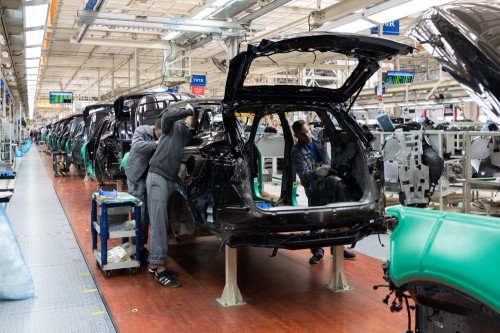
Over the past four decades since the Đổi mới reforms began in 1986, Việt Nam has witnessed the rise of significant economic entities across diverse sectors. In manufacturing, THACO has developed a vast automobile and mechanical engineering ecosystem in Quảng Nam Province, marking its presence as one of Southeast Asia’s largest. VinFast stands out as the country’s pioneering electric vehicle manufacturer, having established a major factory in Hải Phòng and expanded into international markets such as North America and Europe. Similarly, Hòa Phát Group has transformed from a small furniture workshop into a leading steel producer in Southeast Asia, competing directly on the global stage. In the tech industry, FPT has become a major regional player, providing digital transformation services worldwide.
Consumer goods giants like Vinamilk have built a presence in over 50 countries, while Masan Group has developed an expansive consumer ecosystem. In infrastructure, Vingroup has launched unprecedented projects ranging from urban developments to electric vehicles. Meanwhile, Sun Group and BRG Group have heavily invested in tourism infrastructure, reshaping economic regions. Despite these successes, the Vietnam Chamber of Commerce and Industry observes that while the business sector is expansive, it lacks depth and capacity. Economist Trần Đình Thiên and others argue that fostering strong economic groups capable of leading the economy and competing globally is essential for Việt Nam’s goal of becoming a modern industrialised country by 2045.
The development of Vietnamese enterprises faces challenges, as they are still considered young and small. The current broad-based support model has predominantly fostered small enterprises, creating hurdles for the emergence of large corporations. There is a call for a shift towards targeted support, prioritising enterprises that can lead and influence entire production chains. Trần Đình Thiên emphasises the importance of mastering technology and strategically selecting priority industries. Drawing lessons from international examples, Nguyễn Cảnh Cường highlights Japan’s strategic industry choices, South Korea’s development of conglomerates like Samsung and Hyundai, and China’s policy-driven creation of industrial clusters.
Resolutions 68 and 79 are laying the groundwork for Việt Nam’s enterprise development, offering a synchronised policy framework. The country is poised at a pivotal moment, with the potential to establish economic groups of regional significance and gradually solidify their role in global value chains. The challenge remains in executing these plans effectively and consistently to ensure that Việt Nam’s aspiration to “rise strongly” on the international economic stage is realized in the coming decade.