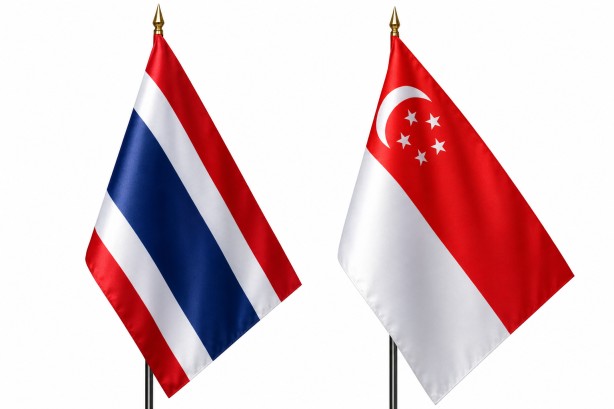
In a move to bolster their bilateral and regional ties, Singapore and Thailand have agreed to enhance cooperation as they gear up for their consecutive chairmanships of ASEAN, with Singapore set to lead in 2027 followed by Thailand in 2028. This strategic collaboration was solidified during the fifth Singapore-Thailand Leaders’ Retreat held in Bangkok on September 2. This marked the first meeting between Singapore Prime Minister Lawrence Wong and Thai Prime Minister Anutin Charnvirakul, as well as the first bilateral retreat in over a decade. Both leaders expressed confidence in the strength of their countries’ relationship and committed to crafting a comprehensive agenda aimed at ensuring continuity through their successive leadership roles in ASEAN.
The discussions paved the way for expanding cooperation in various critical sectors, including artificial intelligence, digital and green economies, energy resilience, food security, connectivity, defense, and security. There was a mutual emphasis on reinforcing a rules-based international order and enhancing ASEAN’s regional integration. Energy cooperation took center stage, with a focus on the ASEAN Power Grid and the Laos-Thailand-Malaysia-Singapore Power Integration Project, which facilitates Singapore’s import of renewable hydropower from Laos via Thailand and Malaysia.
Alongside energy initiatives, the leaders also oversaw the signing of a memorandum of understanding that targets social sector development. This agreement aims to foster an exchange of knowledge and research on social welfare policies and encourages collaboration among relevant institutions. Such cooperation is expected to enhance both nations’ capabilities in addressing social challenges and promoting well-being.
Economic relations between Singapore and Thailand continue to thrive, underscored by the substantial bilateral trade that amounted to approximately US$52.4 billion in 2025. Singapore has consistently been Thailand’s largest foreign direct investment source for the past three years, highlighting the robust economic ties that exist between the two countries. This economic partnership is poised to grow stronger as both nations align their efforts towards shared goals and regional stability.